





What is documentation freshness, and how do you measure it in Metabase?
Documentation freshness is the share of active content reviewed or meaningfully updated inside an agreed window. It finds operational docs that may no longer match how the work actually runs.
What does a documentation freshness chart look like in Metabase?
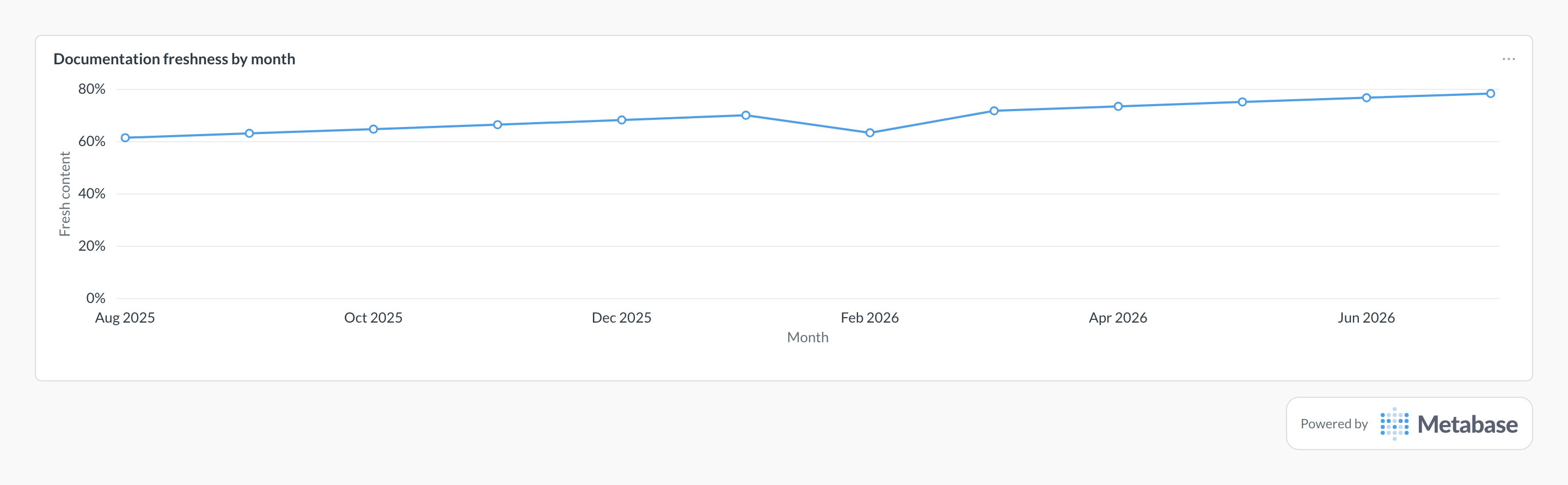
Chart the share of active content reviewed within its policy window as a monthly line: a steady climb means the review cadence is outrunning new content. A dip like February's usually means a batch of imported or migrated docs entered scope unreviewed — new obligations arriving, not existing docs going stale overnight.
Definition
Documentation freshness = current, active items reviewed within the required window divided by all active items in scope. Use different windows for policies, runbooks, project docs, templates, and archives.
Data needed
- Stable content ID, content type, and container or workspace
-
last_reviewed_at, or a meaningfulupdated_atfallback - Owner, reviewer, lifecycle status, and archived/deleted flags
- A freshness-policy window by content class
SQL pattern
SELECT
  content_type,
  COUNT(*) AS active_items,
  COUNT(*) FILTER (
    WHERE last_reviewed_at >= CURRENT_DATE - INTERVAL '90 days'
  ) AS fresh_items,
  ROUND(
    100.0 * COUNT(*) FILTER (
      WHERE last_reviewed_at >= CURRENT_DATE - INTERVAL '90 days'
    ) / NULLIF(COUNT(*), 0),
    2
  ) AS documentation_freshness
FROM content_items
WHERE archived_at IS NULL
GROUP BY content_type
ORDER BY documentation_freshness ASC;