





What is knowledge-base coverage, and how do you measure it in Metabase?
Knowledge-base coverage is the share of required topics or operational objects that have current, owned documentation. The denominator is an explicit inventory—not every page your organization happens to have.
What does a knowledge-base coverage chart look like in Metabase?
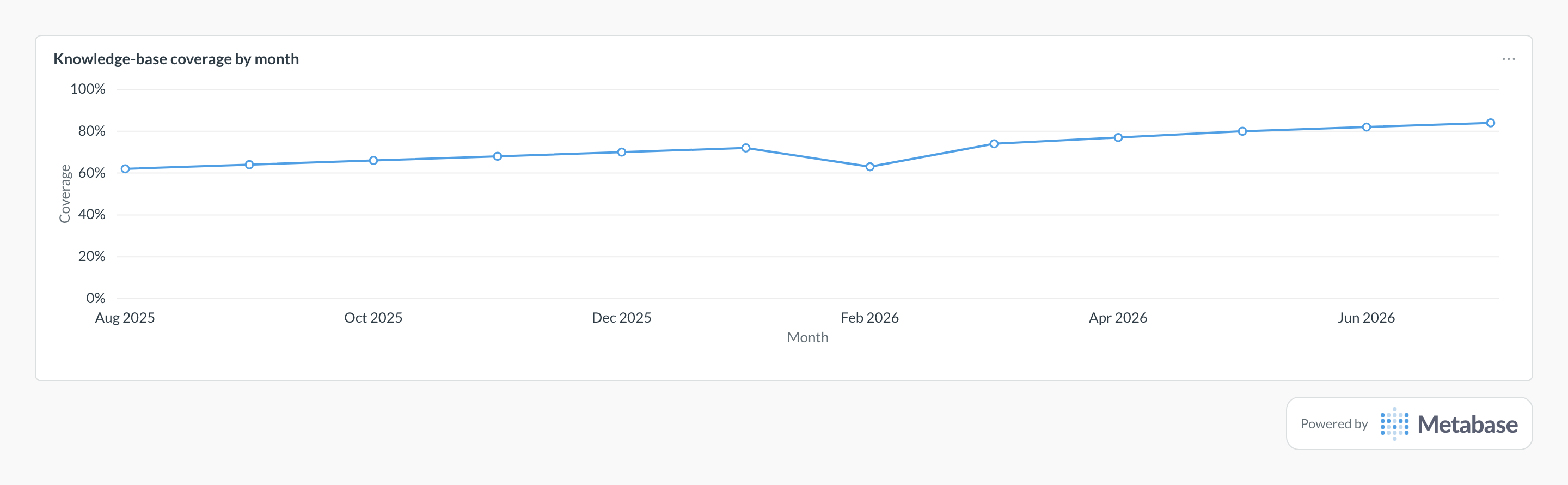
Plot covered topics as a share of the required inventory each month and read it as a ratio, not a page count. The climb is documentation debt being paid down, while a dip like Feb 2026's usually means the denominator grew — a service catalog added to the required list — which is progress in disguise, not lost work.
Definition
A topic is covered when it maps to at least one active content item, has an accountable owner, and meets the relevant freshness policy. Common inventories include services, products, processes, policies, teams, and customer workflows.
Data needed
- A required-topic or required-object inventory
- A mapping from each topic to its canonical content
- Owner, lifecycle status, and last-reviewed date
- Topic group, criticality, and audience for drilldowns
SQL pattern
SELECT
  topic_group,
  COUNT(*) AS required_topics,
  COUNT(*) FILTER (
    WHERE content_id IS NOT NULL
      AND owner_id IS NOT NULL
      AND last_reviewed_at >= CURRENT_DATE - INTERVAL '90 days'
  ) AS covered_topics,
  ROUND(
    100.0 * COUNT(*) FILTER (
      WHERE content_id IS NOT NULL
        AND owner_id IS NOT NULL
        AND last_reviewed_at >= CURRENT_DATE - INTERVAL '90 days'
    ) / NULLIF(COUNT(*), 0),
    2
  ) AS knowledge_base_coverage
FROM required_knowledge_topics
GROUP BY topic_group
ORDER BY knowledge_base_coverage ASC;