
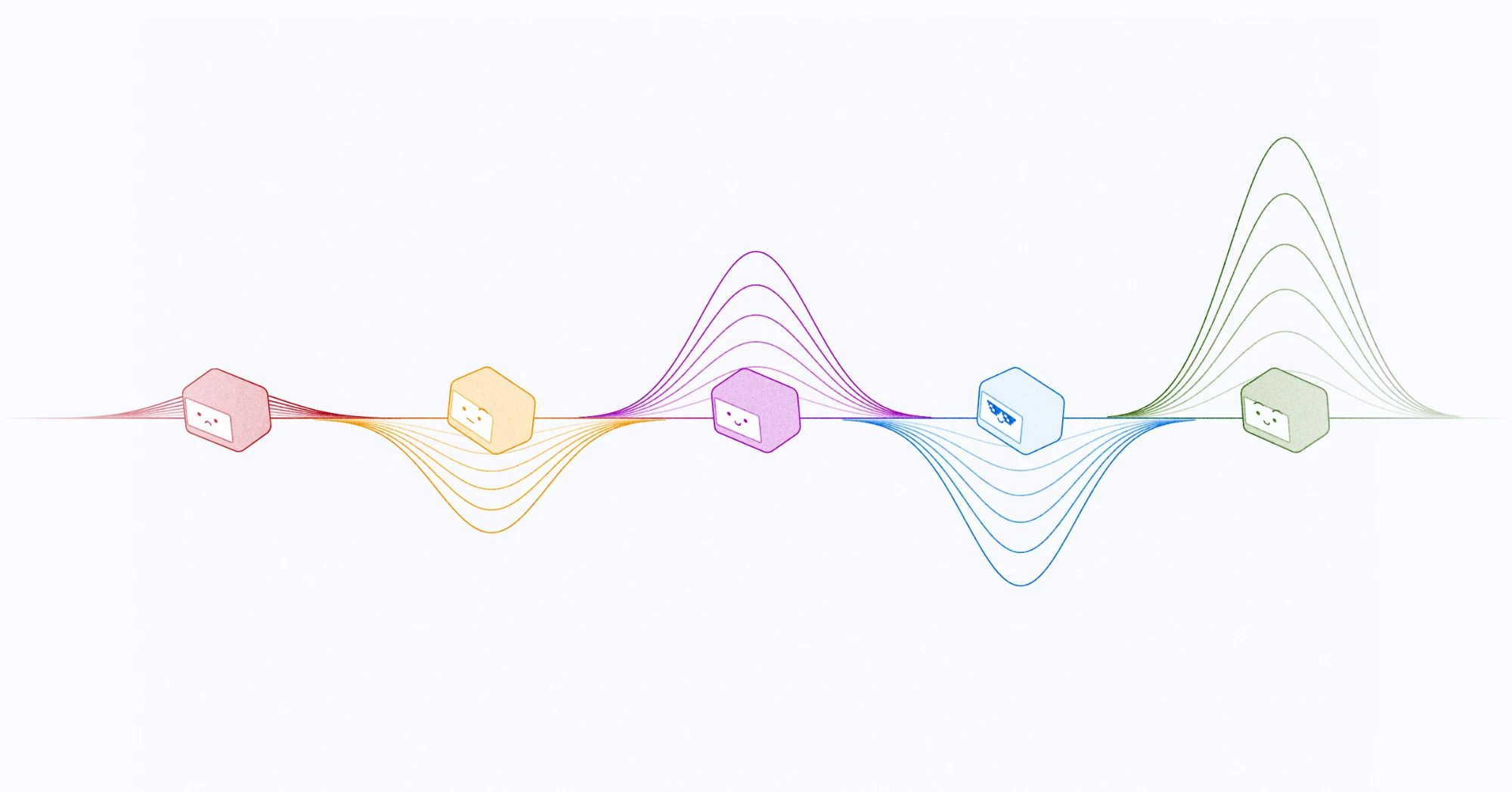
Transformed tables
Robot Data Engineer cleans, dedupes and joins raw tables into modeled tables, built as Metabase transforms, so every question starts from clean data.
Robot Data Engineer takes you from raw data to Data Apps and dashboards. It profiles your database and builds what your analytics runs on: transformed tables, a semantic layer of metrics, measures and segments, and builds reports on top of a verified foundation. It works from your input, and when it isn't sure how your business works, it asks you.
Run this in your terminal
$ npm install -g @metabase/rde
$ rde init
Needs macOS or Linux, Node.js, and Docker or Java 21.
> Build a semantic layer and core business dashboards from our warehouse.
✓ Profiling schema — 1,875 tables across 6 domains
✓ Writing 34 transforms + 226 tests
✓ Defining 18 metrics, 9 segments in the semantic layer
✓ Building 6 dashboards on the curated tables


AI has made analytics creation easier than ever. That puts more demand on tidying up the raw data, modeling it, and defining metrics to make sure it's accurate and trustworthy. Generic agents can write decent code, but they don't know your data.
Robot Data Engineer cleans, dedupes and joins raw tables into modeled tables, built as Metabase transforms, so every question starts from clean data.
It defines your metrics, measures and segments, with descriptions, in Metabase's semantic layer in Data Studio. Every dashboard and AI answer uses the same definition of revenue or churn, and Robot Data Engineer builds on those definitions when you ask for more.
It builds Data Apps and dashboards on the semantic layer, so the numbers match on every dashboard, for whichever area of the business you point it at.
Describe what you need and let Robot Data Engineer build it. You can review and approve before anything goes live.
rde init. It installs the Metabase CLI and the Robot Data Engineer skills for your coding agent.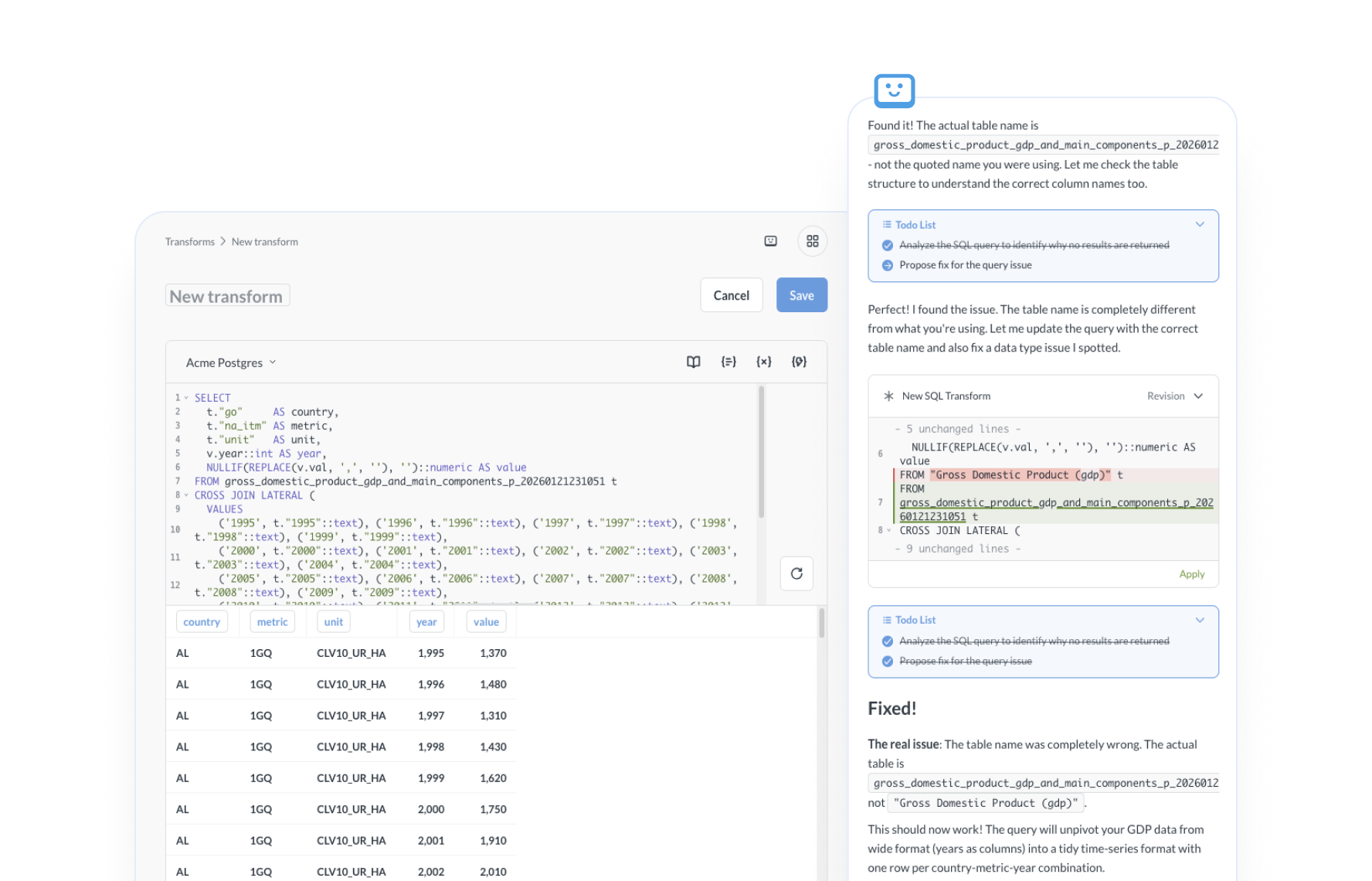
Generic coding agents write code and leave the checking to you. Robot Data Engineer builds away from production and verifies its work before anything ships.
Robot Data Engineer builds in a sandboxed environment, separate from the tables and dashboards your team relies on.
Every transform gets tests, and a table isn't built until they pass. When a definition changes, it reruns the tests and checks every dashboard that depends on it.
Give it a reference, like last quarter's revenue from finance, and it reconciles its numbers and explains any gap.
Add an approval step before anything reaches production, or have changes arrive as a pull request. Approved transforms and definitions move to production through Git. Read about agent-driven development
Data engineering for teams that don't have one, or more specialist muscle for teams that do.
A new Metabase instance with raw data and nothing built yet. Robot Data Engineer builds the tables, metrics and first dashboards for each area of the business.
Metabase is already running and a new database needs modeling. Robot Data Engineer follows your existing naming and structure instead of inventing its own.
Your business logic and transformations already live in other tools. Robot Data Engineer reads that logic, flags the gaps, and rebuilds it as transforms and definitions in Metabase.
A definition needs to change. Because each definition lives once in the semantic layer, Robot Data Engineer finds it, shows the before and after, reruns the tests, and checks every dashboard that depends on it.

Two commands set up a local Metabase to build in, the Metabase CLI, and the Robot Data Engineer skills for your coding agent.
Run this in your terminal
$ npm install -g @metabase/rde
$ rde init
Needs macOS or Linux, Node.js, and Docker or Java 21.