





What is ticket volume, and how do you measure it in Metabase?
Ticket volume is how many support requests you receive and resolve over a period — the load signal every other support metric sits on top of. Read created against solved to see whether you're keeping up, and watch the open backlog for work that's piling up. Measure it in Metabase from help desk data synced into a database (Zendesk, Intercom, or Freshdesk).
What does a ticket volume chart look like in Metabase?
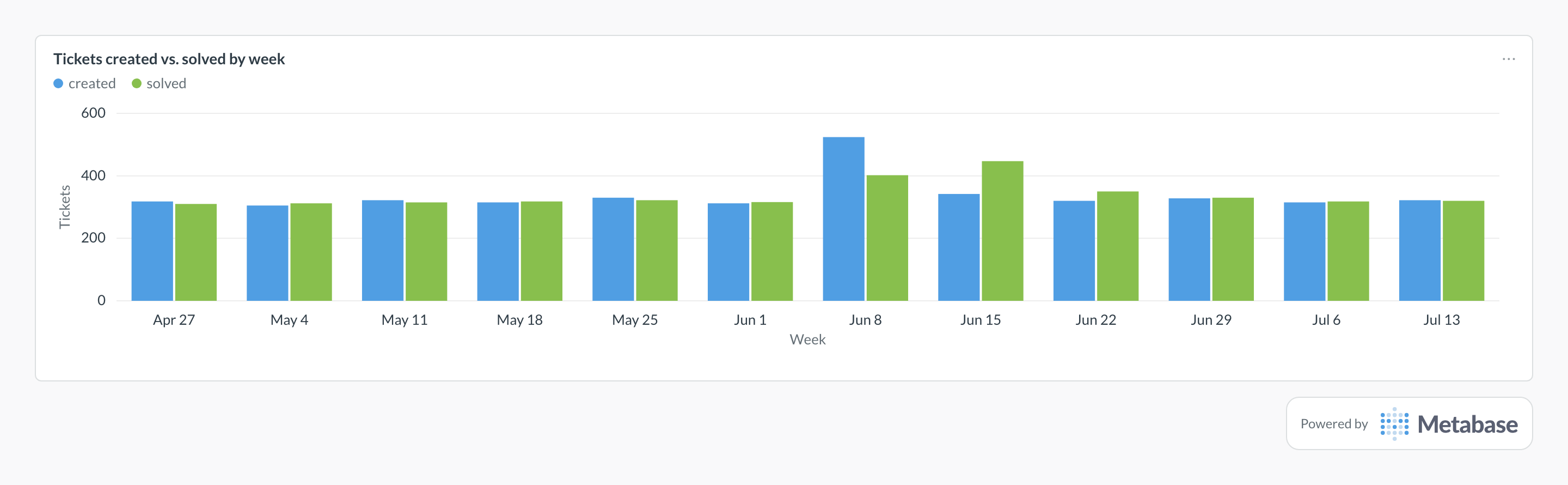
Chart created and solved side by side each week: in steady state both hover around 320 and the backlog stays flat. The Jun 8 spike to 524 created tickets is the shape worth explaining — an incident or a rough release floods intake, solved lags that week, and the catch-up hump on Jun 15 shows the backlog draining instead of quietly growing.
How is ticket volume calculated?
- Created — count of tickets opened in the period, by
created_at. - Solved — count of tickets resolved in the period, by
resolved_at. - Backlog — open tickets right now (no
resolved_at), ideally bucketed by age.
Net flow (created − solved) is the number that predicts trouble: a persistently positive net flow means the queue is growing faster than you clear it.
What data does ticket volume need?
-
A tickets table with
created_atandresolved_at. - Channel, tag/topic, and team fields for segmentation.
- Optionally a status field, so backlog excludes tickets parked as pending on the customer if you want.
SQL patterns
The core load balance — are you clearing tickets as fast as they arrive?
-- Tickets created vs. solved by week — the basic load signal.
SELECT
  weeks.week,
  COUNT(c.id) AS created,
  COUNT(s.id) AS solved
FROM (
  SELECT generate_series(
    date_trunc('week', CURRENT_DATE - INTERVAL '12 weeks'),
    date_trunc('week', CURRENT_DATE),
    INTERVAL '1 week'
  ) AS week
) weeks
LEFT JOIN tickets c ON date_trunc('week', c.created_at)  = weeks.week
LEFT JOIN tickets s ON date_trunc('week', s.resolved_at) = weeks.week
GROUP BY weeks.week
ORDER BY weeks.week;Unresolved tickets bucketed by how long they've been waiting.
-- Current open backlog, bucketed by age.
SELECT
  CASE
    WHEN CURRENT_DATE - t.created_at::date <= 1  THEN '0-1 days'
    WHEN CURRENT_DATE - t.created_at::date <= 3  THEN '2-3 days'
    WHEN CURRENT_DATE - t.created_at::date <= 7  THEN '4-7 days'
    ELSE '8+ days'
  END                              AS age_bucket,
  COUNT(*)                         AS open_tickets
FROM tickets t
WHERE t.resolved_at IS NULL
GROUP BY 1
ORDER BY MIN(CURRENT_DATE - t.created_at::date);
Pitfalls
Where this metric applies
- Zendesk + Metabase — ticket created and solved timestamps, channels, and tags
- Intercom + Metabase — conversation created and closed events
- Freshdesk + Metabase — ticket created/resolved and source
- Front + Metabase — conversation volume by inbox and channel