





What is budget variance?
What does a budget variance chart look like in Metabase?
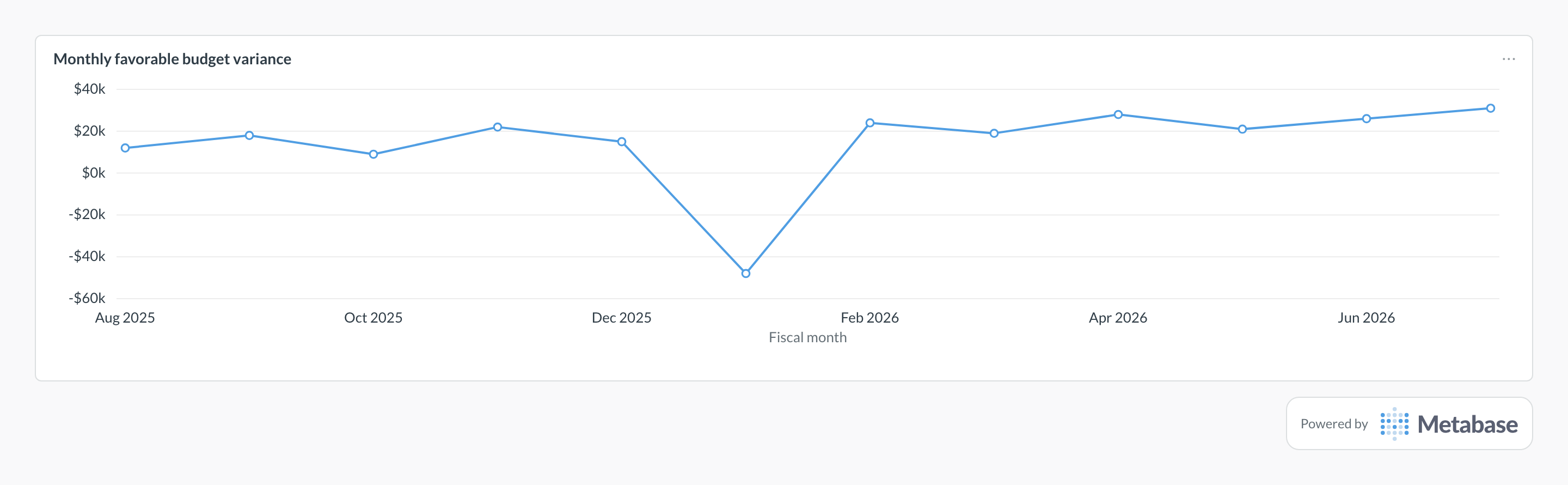
Chart favorable variance by fiscal month as a line, with anything above zero meaning results beat the approved budget. Most months sit modestly favorable, and a sharp unfavorable month like January's is usually timing — an annual renewal posting earlier than budgeted — so check whether the following months claw it back before treating it as overspend.
Definition
Budget variance compares actual results with an approved budget at the same period and management grain. Revenue and expense variance often use different favorable-sign conventions, so dashboards should label the arithmetic explicitly.
What data do you need?
- Approved budget version by period, account, and dimension
- Posted actuals mapped to the same reporting accounts
- Fiscal calendar and legal-entity mapping
- Account behavior: revenue, expense, asset, or liability
- Reporting-currency and consolidation rules
SQL pattern
SELECT
  fiscal_period,
  department_name,
  reporting_group,
  SUM(actual_amount) AS actual,
  SUM(budget_amount) AS budget,
  SUM(CASE
    WHEN account_behavior = 'EXPENSE' THEN budget_amount - actual_amount
    ELSE actual_amount - budget_amount
  END) AS favorable_variance
FROM modeled_budget_actuals
WHERE budget_version = {{budget_version}}
GROUP BY 1, 2, 3
ORDER BY 1, 2, 3;
Common pitfalls
Where does this metric apply?
This metric commonly uses data from NetSuite, Xero, YNAB, QuickBooks, SAP, Ramp, plus any reconciled warehouse or ledger models that provide the same business grain.