




How do you analyze collaboration and work-management data in Metabase?
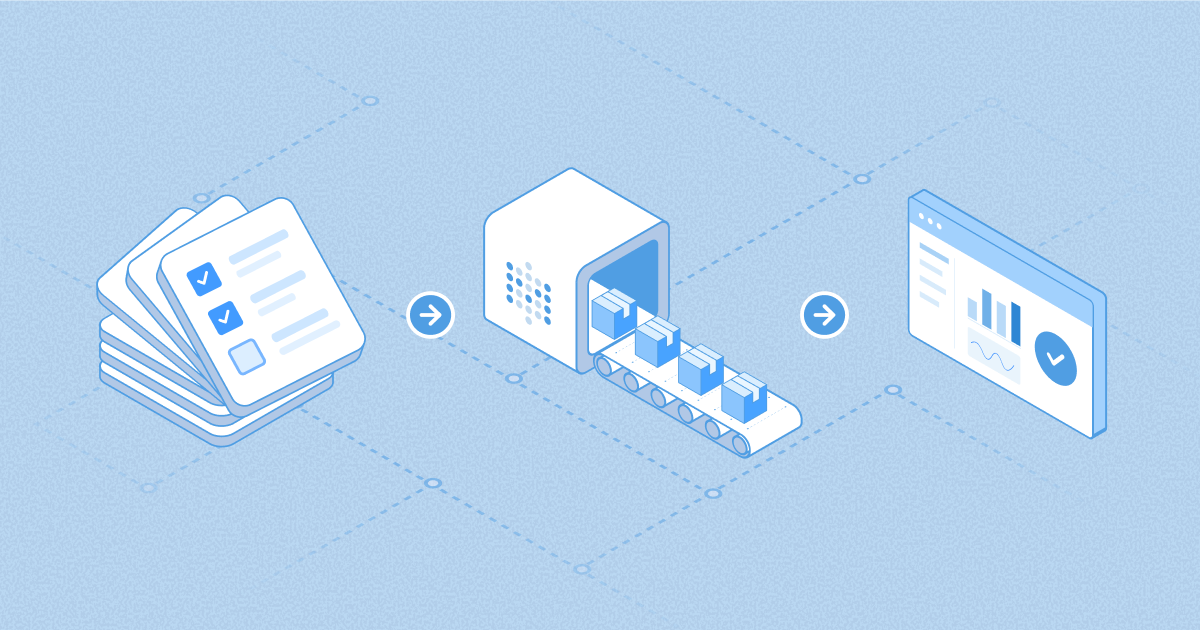
Collaboration and work-management tools hold the operational record of who is working on what, what knowledge is current, and where activity is slowing down. In Metabase, bring those systems into a SQL database and model adjacent layers for work items, content, and collaboration events. Those layers support dashboards for throughput, workload, freshness, coverage, response time, and project health.
TL;DR — Work tools map to items, projects, owners, statuses,
and history. Knowledge tools map to content, containers, owners, and versions.
Communication tools map to events, threads, actors, and response timestamps. MCP
is useful for quick exploration; durable dashboards need database-backed syncs
and history.
Which tools does this cover?
- Notion — docs, databases, projects, and tasks
- Asana — tasks, projects, portfolios, goals, and custom fields
- ClickUp — spaces, lists, tasks, statuses, docs, and goals
- Slack — channels, messages, threads, escalations, and workflows
- Trello — boards, lists, cards, checklists, labels, and members
- monday.com — boards, groups, items, owners, timelines, and updates
Collaboration expansion
- Airtable — records, bases, tables, fields
- Confluence — pages, spaces, page versions, comments
- Wrike — tasks, projects, folders, spaces
- Miro — boards, frames, items, cards
- Microsoft Teams — messages, teams, channels, chats
- Figma — files, projects, components, variables
- Teamwork.com — tasks, projects, milestones, time entries
- Fibery — entities, databases, relations, users
- Coda — table rows, docs, pages, tables
- SharePoint — sites and content items, lists, list items, libraries
- Dropbox — files, folders, revisions, shared links
- Box — files, folders, metadata, collaborations
- Excel — workbooks and tables, worksheets, ranges, formulas
For engineering-heavy work management, cross-link the same model to Linear and Jira.
What is the shared collaboration data model?
| Concept | Common terms | Used for |
|---|---|---|
| Work item | Task, card, item, page, issue | Completion, overdue, workload |
| Project | Project, board, list, database, portfolio | Health, ownership, deadline risk |
| Status | State, list, column, stage, group | Flow, blockers, work in progress |
| Owner | Assignee, member, person, teammate | Load balancing and accountability |
| History | Changelog, activity, actions, stories, updates | Cycle time and time in status |
| Content item | Page, file, doc, workbook, design | Freshness, coverage, and ownership |
| Container | Space, site, folder, workspace, channel | Activity, governance, and lifecycle |
| Collaboration event | Edit, message, comment, reply, share | Activity, participation, and response time |
How do you connect work-management tools to Metabase?
- MCP + CLI route — pull a scoped export through an MCP server,
save CSV, and load it with
mb upload csvfor fast exploration. - Pipeline route — sync the tool into a database or warehouse with a connector, API pipeline, or exports, then build reliable dashboards.
- Cross-source route — join work data to support, CRM, product, engineering, or revenue data to explain outcomes.
What can you analyze across these tools?
- Task completion rate — completed work divided by committed or due work
- Task throughput — completed work per period
- Overdue rate — open work past due divided by open work
- Workload balance — open work by owner, team, project, and status
- Project health score — weighted risk from overdue, blocked, stale, and incomplete work
- Cycle time — started to done, if you have status history
- Documentation freshness — active content reviewed inside its policy window
- Knowledge-base coverage — required topics with current, owned documentation
- Workspace activity rate — active spaces, sites, boards, or channels
- Collaboration response time — first useful human response to a request or thread
Which dashboards should you build?
- Task throughput and completion — created vs completed, completion rate, carryover
- Project health and status — at-risk projects, blocked work, deadline risk
- Workload distribution — open and overdue work by owner and team
- Cycle time and bottlenecks — median cycle time, p90, and time in status
- Overdue and at-risk items — overdue work, stale work, missing owners, missing due dates
- Knowledge-base health — freshness, ownership, coverage, stale content, and workspace activity
Common mistakes
Using live tool views as the source of truth. →
Tool views are useful, but dashboards need repeatable data extracts and
clear definitions.
Measuring cycle time without history. →
Current-state tables cannot reconstruct when work entered each status.
Comparing people by raw task count. →
Use workload views for balancing capacity; task size and complexity vary.
Mixing workflows without normalized statuses. →
Map statuses into common groups such as backlog, in progress, blocked, done,
and canceled.
Related
Analytics
Integrations
FAQ
Does Metabase connect natively to Notion, Asana, or Slack?
No. Metabase reads SQL databases and warehouses. Sync the source tool into a database first, or upload an export with the Metabase CLI for quick analysis.
Can I use one model across multiple tools?
Use a small family of shared models: work items and status history for task systems, content items and versions for knowledge systems, and collaboration events or threads for communication systems. Keep source-specific fields in extension tables.
When do I need event or change history?
You need history for cycle time, time in status, freshness trends, and response time. Current-state tables are enough for basic completion, overdue, ownership, and stale-content counts.