




How to build Notion dashboards in Metabase
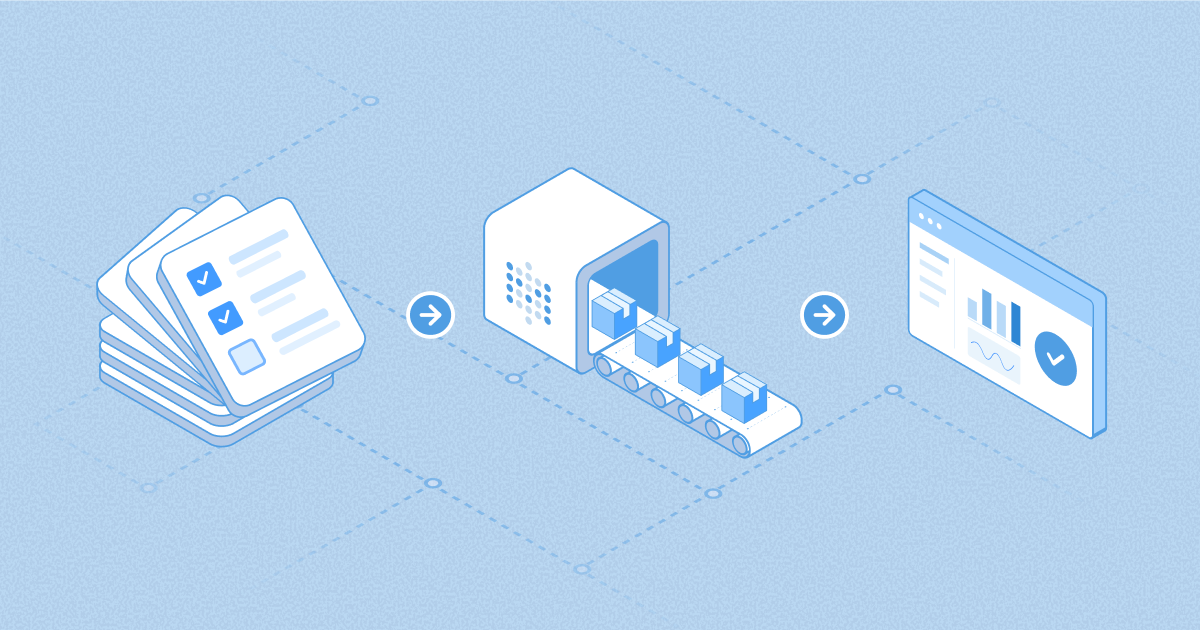
Notion is a workspace for docs, wikis, projects, databases, and lightweight work tracking. Metabase is where you turn that operational activity into shared, trustworthy dashboards. This guide covers two complementary paths: a lightweight MCP + CLI route that pulls live data with the Notion MCP and loads a CSV into Metabase with the Metabase CLI, and a durable pipeline route that syncs Notion into a database so you can build dashboards anyone can read.
How do you connect Notion to Metabase?
Most teams combine both routes: use MCP and CLI uploads for a fast first pass, then move recurring reporting to a warehouse-backed model.
Live data in, quick analysis out
Pair the Notion MCP with the Metabase CLI. Use MCP for live lookups, write the result to CSV, then load it into Metabase as a ready-to-query table and model.
- Quick lookups such as "show me project database health"
- Loading a Notion CSV export into Metabase in seconds
- Spot-checks and one-off analyses without a warehouse
- Great for exploration, not governed reporting
- Use read-only/scoped credentials wherever the MCP server supports them
- CSV uploads are snapshots — refresh or move to the pipeline for history
Durable dashboards with history
Sync Notion into a database or warehouse with a managed connector, custom pipeline, or API, then point Metabase at it.
- Notion dashboards leaders depend on
- Joining Notion data with product, support, sales, or engineering data
- Long-run trends for project database health and task throughput by status
- You own the refresh schedule and clean data model
- Change and activity history need explicit snapshots, events, or changelog syncs
- Metric definitions must be consistent across tools and teams
What can you analyze from Notion data in Metabase?
- Project database health — built from database items and the related pages, databases, users data your sync exposes.
- Task throughput by status — built from database items and the related pages, databases, users data your sync exposes.
- Owner workload by database — built from database items and the related pages, databases, users data your sync exposes.
- Overdue and stale pages — built from database items and the related pages, databases, users data your sync exposes.
- Docs and project coverage — built from database items and the related pages, databases, users data your sync exposes.
Which Notion dashboards should you build in Metabase?
Work overview
A shared pulse of active, completed, and delayed work.
- database items completed by week (line)
- Created vs completed by week (combo)
- Open work by status (stacked bar)
- Overdue work (number + trend)
Project health
Which projects need attention before they slip?
- Project health score (table)
- At-risk projects by owner (bar)
- Blocked or stale work (table)
- Deadline risk by project (heatmap)
Workload balance
Work distribution without turning people into a scoreboard.
- Open work by owner (bar)
- Overdue work by owner (bar)
- Work in progress by team (stacked bar)
- Unassigned work (number + table)
Flow and bottlenecks
Where work waits, ages, or piles up.
- Median cycle time by week (line)
- Time in status (bar)
- Aging work by status (table)
- Throughput by work type (bar)
How do you use the Notion MCP with the Metabase CLI?
Pair the Notion MCP with the Metabase CLI for fast, hands-on analysis. MCP is useful for scoped lookups and exports; the
Metabase CLI's upload command loads CSV data into Metabase and creates
a ready-to-query table and model.
Example workflow
- Ask the MCP server for overdue or recently completed database items.
- Export the result as CSV, keeping stable IDs, owners, containers, status or type, and timestamps.
-
Run
mb upload csvto load it into Metabase as a table and model, then build questions and dashboards on top.
Be honest about the limits
- MCP lookups are excellent for exploration, not scheduled reporting.
-
A CSV upload is a snapshot; refresh it with
mb upload replaceor move to the pipeline for real history. - Status history is required for true cycle time and time-in-status metrics.
-
mb upload csvneeds an uploads database configured under Admin → Settings → Uploads.
How do you set up Notion MCP and the Metabase CLI?
Notion MCP official
- Transport
- Hosted remote MCP via Streamable HTTP
- Auth
- OAuth through Notion
- Best for
- Live scoped lookup and export
Metabase CLI official
- Install
npm install -g @metabase/cli- Auth
mb auth login- Load data
mb upload csv --file data.csv- Requires
- An uploads database (Admin → Settings → Uploads)
{
  "mcpServers": {
    "notion": {
      "url": "https://mcp.notion.com/mcp"
    }
  }
}# Install the Metabase CLI
npm install -g @metabase/cli
# Log in (opens your browser; requires Metabase v62+)
mb auth login --url https://your-metabase.example.com
# Load a database-items export — creates a table AND a model
mb upload csv --file notion-database-items.csv --collection root
# Refresh that same table later from a new export
mb upload replace <table-id> --file notion-database-items.csvCan you generate a Notion dashboard with AI?
Yes. Use the prompt below with any assistant that can run the Notion MCP
and the Metabase CLI. It works end to end: if Notion tables already exist
in Metabase it analyzes those; otherwise it pulls scoped data over MCP, loads
it with mb upload csv, then builds the dashboard and caveats
any metric that needs missing history.
Create a polished Metabase dashboard for Notion work management analytics.
Work end to end: get the data into Metabase if it isn't there yet, then build.

Goal: Help team and program leaders understand completion, throughput, overdue work, workload balance, and project health from Notion data.

Step 1 — Find or load the data:
- First, check what already exists in Metabase (search for notion tables and
  models). If durable Notion data is already present — synced from a warehouse
  or uploaded earlier — use it and skip to Step 2.
- If nothing is there, pull a scoped export with the Notion MCP: database items,
  pages, databases, users. Write each result to a CSV, then
  load it with the Metabase CLI — run "mb upload csv --file <export>.csv" so each
  upload creates a table and a ready-to-query model. Use "mb upload replace <table-id>
  --file <export>.csv" to refresh an existing table instead of creating duplicates.

Step 2 — Inspect before querying:
Do not assume exact table or column names. Inspect available fields, dates, owners,
containers, status values, and whether change/activity history exists before creating
duration or trend cards.

Important:
- Build on whatever data is present; don't claim Metabase connects natively to
  Notion — it reads a database or CLI-uploaded tables.
- Only compute durations when the required start/end or event timestamps exist.
- Exclude archived, deleted, canceled, or test objects from active-population cards.
- Avoid individual performance leaderboards; use owner views for balancing and cleanup.
- A single CSV is a point-in-time snapshot: only build trend cards if there is a
  usable date column or multiple periods have been uploaded.

Dashboard title: Notion Work Management Overview

Sections:
1. Executive summary: Completed work last 30 days; Open work; Overdue rate;
   Median cycle time if available; Unassigned work.
2. Throughput: Created vs completed by week; Completed work by type/status/project.
3. Project health: At-risk projects; blocked work; stale work; upcoming deadlines.
4. Workload: Open and overdue work by owner/team; WIP by status.
5. Flow: Cycle time, lead time, and time in status if history is available.

Filters: Date range, Project/board/database, Status, Owner, Team, Work type.

Output: Build the dashboard if you have permission; otherwise provide the exact
questions, SQL, model definitions, and layout. Include caveats for any metric
that cannot be calculated from the available data.
How do you sync Notion data into a database or warehouse?
For dashboards that need history and reliability, land Notion data in a database first, then connect Metabase to that database.
Connector options
- Managed ETL — use a connector when one covers the objects you need.
- Custom pipeline — use the Notion API for control over fields, history, and refresh cadence.
- MCP + CSV — use this for quick exploration and one-off slices.
Sync pages, databases, properties, comments, and project databases with the API, a managed connector, or a custom dlt pipeline.
Notes
- Land raw tables first, then build clean Metabase models on top.
- Keep change events or daily snapshots if you need trends and duration metrics.
- Normalize owner, team, project, status, due-date, and completed-date fields.
How should you model Notion data in Metabase?
Core tables
| Table | Grain | Key columns |
|---|---|---|
notion_database_items | one row per page in a database | id, database_id, title, status, assignee_id, due_date, completed_at |
notion_databases | one row per Notion database | id, title, workspace_id, created_time, last_edited_time |
notion_users | one row per user | id, name, type, email |
Modeling advice
-
Build a clean
work_itemsmodel with common columns across tools. - Separate current-state fields from change events, activity, or snapshot history.
- Exclude archived, deleted, test, and duplicate objects from active-population metrics.
- Use stable IDs for owner, project, and item joins; display names can change.
Which Notion metrics should you track in Metabase?
| Metric | Definition | Notes |
|---|---|---|
| Task completion rate | Completed items ÷ items due or committed in the period. | Define the denominator once. |
| Task throughput | Completed items per period. | Segment by project, type, or team. |
| Overdue rate | Open items past due ÷ open items with due dates. | Watch missing due dates separately. |
| Workload balance | Distribution of open work across owners or teams. | Use for capacity, not ranking. |
| Project health score | Weighted risk from overdue, blocked, stale, and incomplete work. | Keep the formula visible. |
What SQL powers Notion dashboards in Metabase?
These assume a cleaned analytical model in a warehouse (PostgreSQL dialect). Adjust table and column names to match your connector.
Basic task throughput.
SELECT
  date_trunc('week', completed_at) AS week,
  COUNT(*) AS completed_items
FROM work_items
WHERE completed_at IS NOT NULL
  AND archived_at IS NULL
GROUP BY 1
ORDER BY 1;Open work past due, divided by open work.
SELECT
  project_name,
  COUNT(*) FILTER (
    WHERE completed_at IS NULL
      AND due_date < CURRENT_DATE
  ) AS overdue_items,
  COUNT(*) FILTER (
    WHERE completed_at IS NULL
      AND due_date IS NOT NULL
  ) AS open_items,
  ROUND(
    100.0 * COUNT(*) FILTER (
      WHERE completed_at IS NULL
        AND due_date < CURRENT_DATE
    ) / NULLIF(COUNT(*) FILTER (
      WHERE completed_at IS NULL
        AND due_date IS NOT NULL
    ), 0),
    2
  ) AS overdue_rate
FROM work_items
WHERE archived_at IS NULL
GROUP BY project_name
ORDER BY overdue_rate DESC NULLS LAST;A capacity view, not a performance leaderboard.
SELECT
  owner_name,
  COUNT(*) FILTER (WHERE completed_at IS NULL) AS open_items,
  COUNT(*) FILTER (
    WHERE completed_at IS NULL
      AND due_date < CURRENT_DATE
  ) AS overdue_items
FROM work_items
WHERE archived_at IS NULL
GROUP BY owner_name
ORDER BY open_items DESC;