




What is feedback vote velocity?
What does a feedback vote velocity chart look like in Metabase?
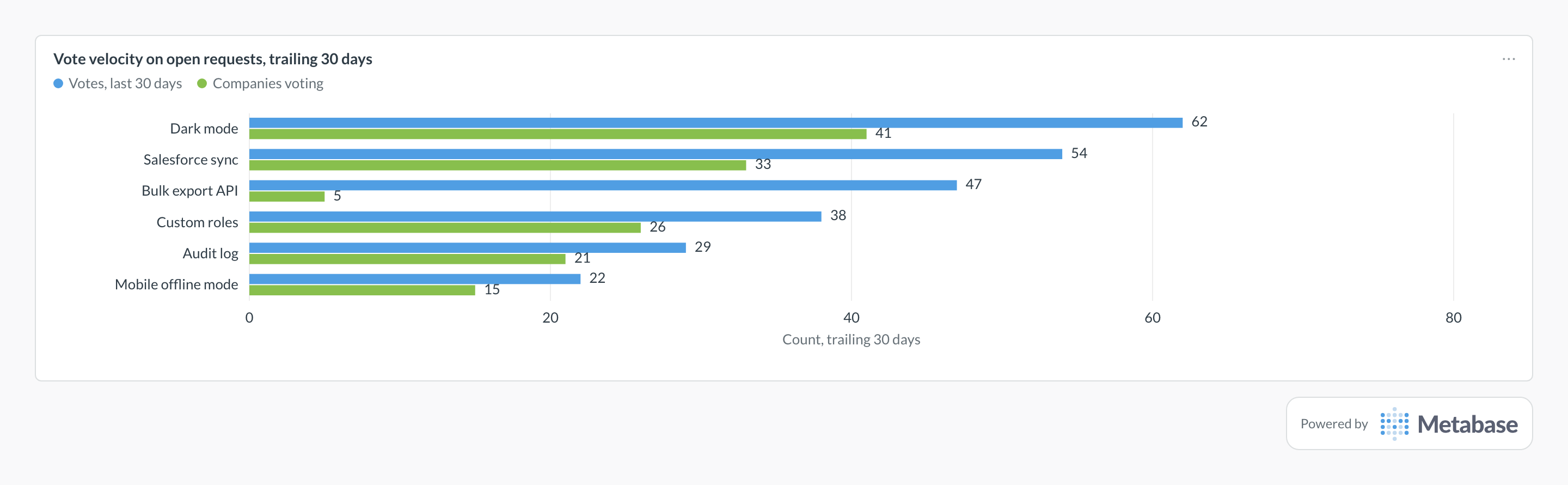
Rank open requests by votes gathered in the trailing 30 days — not lifetime totals — so the top of the chart is what customers want right now. Read the companies bar against the votes bar: bulk export API's 47 votes from just five companies is one account campaigning, a different signal from dark mode's broad, many-company demand.
Definition
Feedback vote velocity is the number of new votes a feature request gathers per recent period — typically the trailing 30 days — rather than its lifetime total. It surfaces what customers want now: an old request with 400 dormant votes ranks below a month-old request gaining ten votes a week.
What data do you need?
- Votes at vote grain with timestamps (not just a count column)
- Request status, so shipped and closed items drop out
- Voter account or company for segment weighting
- Product area fields for roll-ups
- Optionally, account revenue for value-weighted velocity
SQL pattern
SELECT
  f.title,
  f.product_area,
  COUNT(*) AS votes_last_30_days,
  COUNT(DISTINCT v.company_id) AS companies_voting
FROM votes v
JOIN feedback_items f ON f.id = v.feedback_item_id
WHERE v.created_at >= CURRENT_DATE - INTERVAL '30 days'
  AND f.status NOT IN ('shipped', 'closed')
GROUP BY f.title, f.product_area
ORDER BY votes_last_30_days DESC
LIMIT 20;
Common pitfalls
Where does this metric apply?
This metric commonly uses data from Canny, Aha!, Featurebase, Productboard, plus any warehouse models that provide the same grain.